
Let’s be honest for a moment, losing a tooth feels odd and it feels embarrassing to another level for some people, not to mention the feeling of discomfort till the new one comes. Why? Simply because the tongue keeps going to the gap. Then, you start chewing on the other side without even deciding to, and at some point, you think okay, what do I do about this? If by any chance someone has mentioned dental implants, you’ve probably got questions like, ” Will it hurt? How long does it take? Can anyone get one?” These are really the good questions to have in mind to be honest, and do you know what the best part is? Here, in this guide, you’ll learn about the steps to take for dental implants in Walnut Creek, so nothing catches you off guard.
Just a quick note before we begin. Every mouth is different, and nothing here replaces an actual examination of the issue. For this, you can only think of it as a rough map of the road, not a diagnosis.
So what is an implant, exactly?
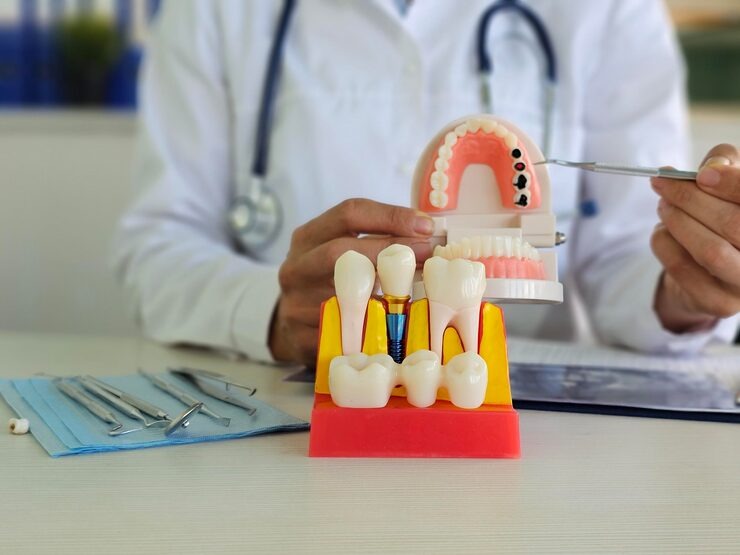
Before we begin with steps to keep in mind while making a decision. Let’s discuss what an implant is in the real-world and in simple language.
It’s a small post, usually titanium, that goes into your jawbone. On a deeper level, it works like a tooth root. Over a few months of time, the bone grows around it, and then it holds it firmly in place. Then a custom crown gets attached on top, and that’s the part you see and chew with.
What sets it apart from other options is that it stands on its own. Like, a bridge leans on the teeth next to the gap; a denture rests on your gums.
Remember, an implant doesn’t borrow support from anything. That said, it isn’t the right fit for everybody, which brings us to the first step.
Start with a conversation
Yes, the first visit to your dentist won’t be about booking surgery, It’ll be mostly about listening.
Your dentist will ask you about the issues you’re facing with your teeth. Maybe the gap shows when you smile. Maybe you can’t chew steak anymore. Maybe your denture slips and you’re tired of it. Whatever it is, say so, because your goals shape the whole plan.
Then comes the examination. A proper dental examination.
In this, your dentist looks at your teeth, gums, and will usually take X-rays. That’s how they see what’s happening under the surface, including how much bone you have and where nerves and sinuses sit.
Don’t forget to bring your own questions as well. Make sure to write them on your phone, especially if you tend to forget them.
Be honest about your health
Implants depend on healing. So anything that slows healing is worth mentioning.
Diabetes that isn’t well controlled can matter. This also means that you should honestly share about your smoking habits, medications you take, or even certain medical conditions that you thought not to share with anyone before.
In short, tell your dentist everything, even if it seems unrelated. It’s a matter of your health, nothing should be hidden from the doctor. Nobody’s judging. Overall, it’s about keeping you safe and giving the implant a fair shot.
Your gums need to be in good shape
Before an implant goes in, make sure that you have strong gums. They should be ready for it.
If you have active gum disease, it needs treatment first. Gum disease affects the tissue and bone around natural teeth, and the American Academy of Periodontology points out that implants can develop their own gum and bone problems too. Same with decay or infection. It’s much easier to deal with those before an implant than after.
Does that add time? Sometimes. But a house needs a solid foundation before anyone puts up walls.
Is there enough bone?
An implant needs something solid to hold onto. When a tooth is lost, the bone in that spot can slowly shrink. The longer the gap has been there, the more likely that is.
Imaging lets your dentist measure the height and width of the bone you have. If there’s plenty, great. If not, it isn’t always the end of the road. A bone graft can build the area back up, and in some cases of the upper jaw a sinus procedure may come up. These add months of healing, but they can make an implant possible when it otherwise wouldn’t be.
Ask to see your images. A good dentist is happy to point things out and explain them in plain English.
Look at the other options too
An honest consultation includes alternatives, even if an implant looks like the most important next step at first glance.
A bridge replaces the missing tooth by attaching a false one to crowns on the teeth beside it. It’s fixed, it’s often quicker, and there’s no surgery. The catch is that those neighboring teeth have to be reshaped to hold it.
A denture is removable. It can replace a few teeth or a whole arch, and it’s sometimes the sensible choice when many teeth are missing, or surgery isn’t a good idea. Some people find dentures less steady than they’d like.
An implant doesn’t rely on neighboring teeth and can feel very natural. It does involve surgery and a longer timeline, and it asks for healthy gums and enough bone.
None of these wins every time. It depends on your mouth, your health, your goals, and your budget. Milcovich Dental Arts offers implants along with bridges and other ways to replace teeth, so you can compare them in one conversation.
Get the timeline and the cost in writing
Before you say yes to anything, you should be able to answer a few things. How many visits? In what order? Does anything need to happen first, like an extraction or a graft? What will be in the gap while you heal? And what’s the total cost, crown included?
Timelines vary quite a bit. Some people finish in a few months. Others, especially if they need grafting, take longer. Be a little wary of anyone who quotes a firm schedule before examining you.
Cost deserves a straight talk too. Implants often cost more up front than other choices, though they’re meant to be a long-term fix. Ask for a written breakdown, and check what your insurance might cover. Plans differ a lot, and some pay for certain parts of treatment but not others. You shouldn’t have to guess about money.
The day of the procedure
This is the part most people dread, and it’s usually calmer than they expect.
Your mouth is numbed. The dentist makes a small opening in the gum, prepares a spot in the bone, and places the implant. Then the gum is closed or shaped around it. Most people describe pressure, not pain. If you’re nervous, tell the office beforehand. There are ways to make things more comfortable, and a practice that cares about patient comfort will want to know.
Afterward, expect some soreness, swelling, and maybe a little bruising. You’ll get instructions about eating, cleaning, and medication. Follow them. They really do make a difference.
Then you wait
This stage is quiet, but it matters.
Over the next several months, the implant fuses with your bone. You can’t see it happening, and you can’t hurry it. You’ll likely have a few checkups so your dentist can make sure healing is on track.
Go easy on that side. Skip hard, crunchy foods for a while, keep the area clean, and avoid smoking if you can, since it’s linked to more implant problems. If something feels wrong, like worsening pain, swelling, a loose feeling, or bleeding that won’t settle, call the office. Don’t tough it out.
The crown goes on
Once the implant has healed, your dentist attaches a small connector called an abutment and fits a custom crown over it. They’ll match the shape and color to your other teeth and check your bite so it feels right.
Taking care of it afterward
An implant can’t get a cavity, but there’s a high chance that gum and bone around it can still get infected.
Why?
Simply because plaque sticks to implants just like it does to natural teeth.
So the routine to keep it nice is pretty familiar.
Make sure that you brush twice a day, don’t forget to clean between your teeth daily, and keep your checkups and cleanings.
Look after it well and an implant can last for many years, just remember this.
Ready to talk?
See, in our view, looking into dental implants in Walnut Creek doesn’t have to feel like a big task. You can easily begin with a simple normal dental routine checkup. Make sure to book the appointment or directly walk in, ask your questions, get checked, and find out whether an implant makes sense to you or not. Yes, it’s that simple!