
Dental problems rarely announce themselves clearly. A twinge when you drink something cold might be a small area of enamel wear, or it might be early decay. Bleeding gums might mean you brushed too hard, or they might be a sign of gum disease. A chipped tooth that doesn’t hurt can still be a tooth that needs attention soon.
That is why this guide leans on one idea throughout: the same symptom can have different causes, so treatment should be based on a professional examination, not self-diagnosis. What follows can help you understand what your symptoms might mean, what questions to ask, which treatments exist, and when waiting is reasonable and when it isn’t. It cannot tell you what is wrong with your teeth.
Milcovich Dental Arts is a dental practice in Walnut Creek, California, led by Dr. William Milcovich. The practice focuses on helping patients understand their oral health, their treatment options and their next steps, with an emphasis on comfort, clear explanations and honest guidance. Whether you are dealing with sudden pain, a tooth you’ve been meaning to have checked, or a treatment recommendation you want to understand better, the sections below walk through the most common situations.
What Are the Most Common Dental Problems Patients Experience?
Most dental problems fall into a handful of categories. Here is what each one is, why it happens, what it often feels like, and how dentists generally approach it.
Tooth decay (cavities)
What it is: Decay is damage to the tooth’s structure caused by acids produced when bacteria in dental plaque break down sugars and other carbohydrates. Over time, the acid dissolves minerals in the enamel, and a cavity can form.
Why it happens: Plaque that isn’t removed regularly, frequent snacking or sipping sugary or acidic drinks, dry mouth, and limited fluoride exposure can all raise the risk.
Symptoms: Early decay often causes none. Later, people may notice sensitivity, visible spots or holes, or pain when biting or eating sweets.
Why evaluation matters: Decay found early can often be treated more conservatively than decay that has reached the inner layers of the tooth.
Treatment categories: Preventive measures such as fluoride and improved home care for the earliest changes, fillings, crowns for larger damage, and root canal treatment or extraction if the nerve is affected or the tooth cannot be saved.
Toothaches
A toothache is a symptom, not a diagnosis. It can come from decay, a cracked tooth, a failing filling, infection, gum disease, trauma or sensitivity. Because the causes differ so much, so do the treatments, which range from a simple filling to root canal treatment. A later section covers toothaches in more detail.
Chipped or broken teeth
What it is: Loss of part of the tooth, from a small piece of enamel to a large portion of the crown.
Why it happens: Biting hard foods, accidents, sports injuries, grinding, and teeth already weakened by large fillings or decay.
Symptoms: A rough or sharp edge, sensitivity, pain on biting, or a visible change in the tooth’s shape. Some chips cause no pain at all.
Why evaluation matters: A small cosmetic chip and a fracture that exposes the inner tooth look similar from the outside but can call for very different care.
Treatment categories: Smoothing or polishing, dental bonding, fillings, crowns, root canal treatment where needed, or extraction followed by tooth replacement for severely damaged teeth.
Cracked teeth
Cracks can be thin, partial or deep, and some are difficult to see. They may cause pain when biting, sharp pain when you release the bite, or sensitivity to temperature changes. Treatment depends on where the crack is and how far it extends. There is a full section on this below.
Gum inflammation and gum disease
What it is: Gingivitis is inflammation of the gums caused by plaque along the gumline. Periodontitis is a more advanced condition in which the supporting tissues and bone around the teeth are affected.
Why it happens: Plaque and tartar buildup are the main drivers. Smoking, diabetes, certain medications, hormonal changes and family history can also influence risk.
Symptoms: Red, swollen or tender gums, bleeding when brushing or flossing, persistent bad breath, and in later stages receding gums or loose teeth.
Why evaluation matters: Gum disease is often painless in its early stages, so symptoms can be easy to overlook.
Treatment categories: Professional cleaning and better home care for early inflammation, and deep cleaning, ongoing periodontal maintenance and sometimes specialist care for periodontitis.
Bleeding gums
Bleeding is most often a sign of inflamed gums, which is usually plaque-related. A later section explains the causes and when bleeding should be checked.
Tooth sensitivity
What it is: A short, sharp response to cold, heat, sweets, acidic foods or air.
Why it happens: Worn enamel, exposed root surfaces from gum recession, early decay, a cracked tooth, a worn filling, or grinding can all be factors.
Why evaluation matters: Sensitivity can be a minor issue, but it can also be the first sign of something that needs treatment. Sensitivity that lingers, is getting worse, or is limited to one tooth is worth having examined.
Treatment categories: Desensitizing products, fluoride, bonding over exposed areas, treatment of decay or a failing restoration, or management of grinding.
Missing teeth
Teeth can be lost to decay, gum disease, injury or extraction. Beyond appearance, a missing tooth can affect chewing, speech, and how neighboring teeth shift over time. Options include implants, bridges and removable dentures, covered in their own section below.
Worn or damaged teeth
Teeth wear down from grinding or clenching, acid exposure (from reflux or frequent acidic drinks, for example), abrasive brushing, and years of normal use. Signs include flattened or shortened teeth, translucent edges, sensitivity and small chips. Treatment may involve addressing the cause, such as a nightguard for grinding, and restoring the teeth with bonding, crowns or other restorations.
Dental infections and abscesses
What it is: A dental abscess is a pocket of pus caused by bacterial infection, which may develop at the tip of a tooth root or in the gum beside it.
Why it happens: Deep decay, a cracked tooth, trauma, or advanced gum disease can allow bacteria to reach tissues that are normally protected.
Symptoms: Throbbing pain, a pimple-like bump on the gum, swelling, a bad taste, sensitivity to hot or cold, and sometimes fever. Pain can sometimes ease if an abscess drains, but the infection has not gone away.
Why evaluation matters: Dental infections do not resolve on their own, and they can spread. They need professional care promptly.
Treatment categories: Drainage, root canal treatment, extraction, and sometimes antibiotics, depending on the situation.
How Can You Tell If a Tooth Needs Professional Attention?
Many people wait because they are unsure whether a symptom is “bad enough.” These guidelines may help, though they are not a substitute for an exam.
Symptoms that generally warrant a routine appointment (soon, but not an emergency):
- Mild sensitivity to hot, cold or sweets that comes and goes
- Gums that bleed occasionally when you brush or floss
- A small chip with no pain and no sharp edge
- Gradual gum recession
- Bad breath that doesn’t improve with brushing and cleaning your tongue
- Staining or changes in tooth color
- A rough spot you can feel with your tongue
- Food regularly catching between two teeth
Symptoms that may call for prompt attention (contact a dentist within a day or so):
- Persistent tooth pain, or pain that wakes you at night
- Pain when you bite down or release a bite
- Temperature sensitivity that lingers for a minute or more after the stimulus is gone
- A broken or fractured tooth, especially with a sharp edge or visible damage
- Swelling in the gums or face
- A bad taste or drainage near a tooth or gum
- A loose permanent tooth
- Difficulty chewing
- Bleeding that is heavy or won’t settle
Symptoms that may require emergency medical care are covered in the section on urgent treatment below.
Two points are worth stressing. First, the absence of pain does not mean the absence of a problem; decay, gum disease and some cracks can progress quietly. Second, the opposite is also true: severe pain does not always mean something catastrophic, and your dentist can usually find the cause and offer relief.
What Causes Toothaches and When Should You See a Dentist?
Tooth pain has many possible sources, including:
- Tooth decay, which may cause sensitivity at first and pain as it nears the nerve
- Cracked teeth, which can cause sharp pain on biting
- Damaged or worn fillings, which can allow bacteria and fluids to reach the tooth
- Infection, including abscesses at the root tip or in the gums
- Gum disease, which can cause tenderness, swelling or deep aching around a tooth
- Dental trauma, even when the tooth looks intact
- Tooth sensitivity, from exposed dentin or worn enamel
- Problems involving the pulp, the soft tissue in the center of the tooth that contains nerves and blood vessels
Pulp problems are common reasons for more significant pain. When the pulp becomes inflamed or infected, it may cause lingering reactions to heat or cold, throbbing, or pain that arises with no trigger at all. The American Association of Endodontists describes these patterns as signs that a tooth should be evaluated.
Occasional sensitivity versus pain that needs attention
Brief, mild sensitivity that fades quickly when the trigger is removed is common, and it is often related to enamel wear or exposed root surfaces. Pain is more concerning when it is:
- Persistent, lasting beyond a few days
- Worsening over time
- Spontaneous, appearing without any trigger
- Lingering, continuing after cold or heat is gone
- Accompanied by swelling, fever, or a bad taste
Why pain relief alone isn’t enough?
Over-the-counter pain medicine, when used as directed and when it is safe for you, can make you more comfortable while you arrange care. But it does not treat the cause. A cracked tooth continues to crack, decay continues to progress, and an infection continues to spread, even when the pain is muted. Pain that fades on its own can also be misleading: sometimes it means the nerve has stopped responding rather than that the problem has resolved.
Some home measures are generally considered reasonable until you can be seen: rinsing gently with warm water, flossing carefully to remove trapped food, using a cold compress on the outside of the cheek for swelling, and avoiding chewing on the painful side. Don’t place aspirin directly against the gum, which can irritate the tissue.
This guide cannot tell you why a particular tooth hurts. A dentist can examine the tooth, test it, and take images to find the cause.
What Are the Warning Signs of Tooth Decay?
How decay develops
Your mouth contains many bacteria. Those that gather on the teeth in a sticky film called plaque feed on sugars and starches and produce acid. Repeated acid exposure removes minerals from the enamel, the tooth’s hard outer layer. Saliva and fluoride can help rebuild those minerals, which is why very early changes can sometimes be reversed. When the balance tips toward mineral loss over time, a cavity forms. If it isn’t treated, decay can move through the enamel into the softer dentin beneath and eventually toward the pulp.
Why early decay is easy to miss?
In its early stages, decay often has no symptoms. It can develop between teeth, along the gumline, under old fillings, or in the grooves of back teeth, where it is hard to see. This is one reason regular exams and X-rays, when clinically indicated, matter.
Signs that may appear
- Sensitivity to sweets, cold or heat
- White chalky patches, which may be an early sign of mineral loss
- Brown or dark spots
- Visible pits or holes
- Food repeatedly packing into one spot
- Pain on biting
- Toothache in more advanced cases
- Bad taste or odor from a specific area
Why early treatment can mean simpler treatment
Decay caught early may be managed with fluoride and closer monitoring, or may need only a small filling that preserves most of the natural tooth. Decay that is left alone tends to grow, and larger damage can require a crown, root canal treatment or extraction.
Fillings and individual decisions
A filling is one possible treatment for a cavity, not an automatic response to every finding. Whether a spot is monitored, treated with fluoride, filled, or restored with a crown depends on how deep it is, whether it is active, where it sits, how much healthy tooth remains, and your overall risk of decay. Your dentist should explain why they recommend a particular approach, and you are welcome to ask.
Why Do Gums Bleed and When Is It a Concern?
Healthy gums generally don’t bleed with normal brushing and flossing. Bleeding is a sign of inflammation in most cases.
Common causes
- Plaque and gingivitis.
When plaque sits along the gumline, the gums become inflamed, red and prone to bleeding. This is gingivitis, the earliest stage of gum disease. At this stage it is typically reversible with consistent home care and professional cleaning.
- Tartar buildup.
Plaque that stays in place can harden into tartar (calculus), which cannot be removed by brushing or flossing. It provides a rough surface where more plaque collects and keeps the gums irritated.
- Periodontitis.
If inflammation continues, it can progress into the deeper supporting tissues and bone. Periodontitis may involve gum pockets, recession and loosening of teeth.
- Inadequate oral hygiene or inconsistent flossing.
Ironically, gums that bleed when you restart flossing are often reacting to existing inflammation, and bleeding often decreases as the gums become healthier. If it doesn’t, an exam is advisable.
- Other contributing factors.
These may include brushing too aggressively or with a hard brush, ill-fitting dental work, hormonal changes such as pregnancy, smoking or tobacco use, diabetes, certain medications including blood thinners, dry mouth, and some nutritional or medical conditions.
When bleeding should not be ignored?
Occasional light bleeding after a day of rough brushing is different from bleeding that:
- Occurs regularly
- Lasts more than a week or two
- Comes with swelling, tenderness or bad breath
- Happens alongside receding gums or loose teeth
- Appears spontaneously, without brushing
- Is heavy or hard to stop
Gum disease is a common condition but can progress without pain. The American Academy of Periodontology notes that early detection offers the best chance of controlling it. Milcovich Dental Arts provides preventive and periodontal care, including routine cleanings, deep cleanings and gum health assessments, so bleeding gums can be examined and a plan discussed.
What Should You Do If You Have a Chipped or Broken Tooth?
For a patient looking for care for a broken tooth in Walnut Creek, the first hours matter mostly because they determine how comfortable you are and whether the tooth is protected. Here is what generally helps.
What to do right away
- Rinse your mouth gently with warm water to clean the area.
- Save any pieces you can find. Bring them with you; occasionally a fragment can be useful.
- Control bleeding by applying gentle pressure with clean gauze.
- Apply a cold compress to the outside of the cheek to reduce swelling and discomfort.
- Cover a sharp edge if one is cutting your tongue or cheek. Dental wax from a pharmacy or a piece of sugar-free gum can serve as a temporary cover.
- Call a dentist as soon as you can and describe what happened.
What not to do
- Don’t chew on the damaged tooth.
- Don’t try to file or shape it yourself.
- Don’t use superglue or household adhesives on the tooth.
- Don’t put aspirin against the gum.
- Don’t assume that the absence of pain means the tooth is fine.
- Don’t delay if there is swelling, a visible dark or pink center in the tooth, or severe pain.
Why contact a dentist even if it doesn’t hurt
Teeth are living structures. A fracture may expose the dentin or pulp, create a pathway for bacteria, or leave the remaining tooth vulnerable to further breaking. A small chip may need only smoothing. A larger break can need a restoration, and one that reaches the pulp may need root canal treatment. The only way to know is to have it examined.
When it becomes urgent
A broken tooth warrants prompt attention if there is significant pain, bleeding that doesn’t stop, a fracture exposing the inner part of the tooth, a loose or displaced tooth, swelling, or a sharp edge injuring the soft tissues. Facial trauma accompanied by difficulty breathing, confusion, loss of consciousness, or suspected jaw fracture requires emergency medical care.
What determines treatment
Your dentist considers the extent and location of the damage, whether the pulp is involved, how much healthy tooth structure remains, your bite, the condition of the gums and the supporting bone, and your goals. Depending on those factors, options may include:
- Dental bonding for smaller chips, where tooth-colored material is shaped onto the tooth
- A filling or other direct restoration when a portion of the tooth has broken away but enough structure remains
- A dental crown when the damage is more extensive and the remaining tooth needs protection
- Root canal treatment, where clinically necessary, if the pulp is damaged or infected
- Extraction in severely damaged teeth that cannot be restored
- Tooth replacement after extraction, when appropriate, such as an implant, bridge or denture
Not every broken tooth needs a crown, and not every broken tooth can be saved with a simple repair. Milcovich Dental Arts provides restorative care for chipped and broken teeth, including fillings, bonding and crowns.
How Are Cracked Teeth Diagnosed and Treated?
Why cracks are hard to find
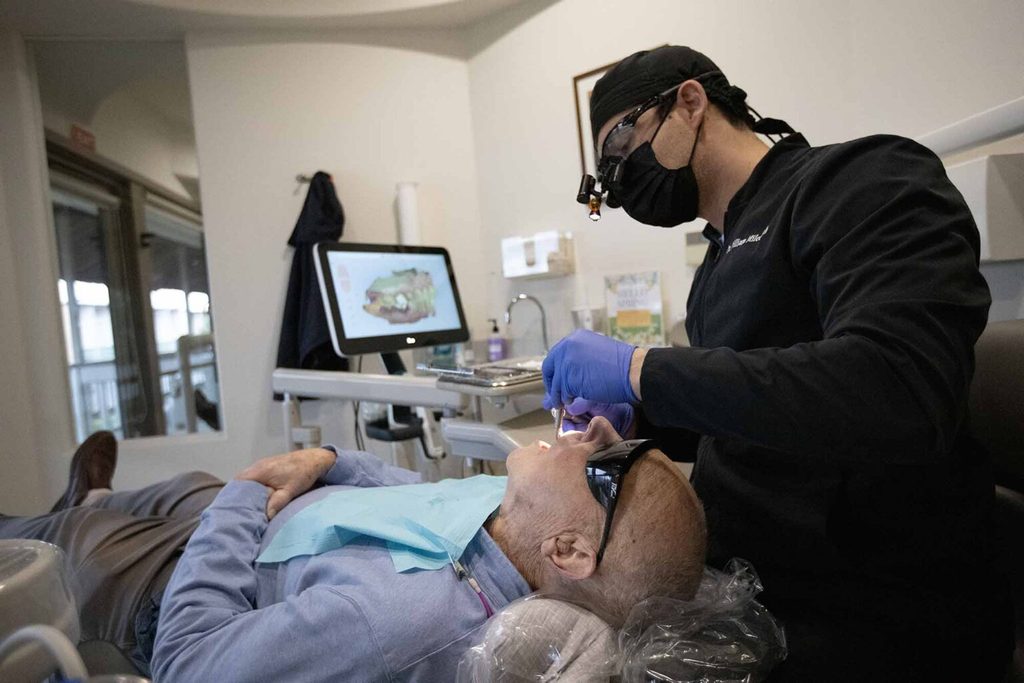
A cracked tooth is not always a visibly broken one. Cracks can be fine lines in the enamel that are harmless, or they can extend deep into the tooth. Some are invisible on X-rays because they run in a direction that doesn’t show on standard images. Patients may describe symptoms that come and go, which makes cracks tricky to pin down.
Symptoms
- Sharp pain when biting, particularly when releasing the bite
- Sensitivity to cold or sweets
- Pain that is hard to locate
- Intermittent discomfort that disappears for days or weeks
- Gum swelling near the tooth in more advanced cases
How dentists evaluate cracks
Diagnosis usually combines several steps:
- A history of your symptoms, including what triggers them
- A visual examination, sometimes with magnification or a light directed through the tooth
- Bite testing, where you bite on a small instrument to see whether pressure on a particular cusp reproduces the pain
- Gum probing, since a narrow, deep pocket next to one tooth can sometimes point to a crack
- Dental imaging, where appropriate, to look at the tooth’s root, the surrounding bone and signs of infection
- Pulp testing, to see how the nerve is responding
What shapes the treatment
The American Association of Endodontists describes different types of cracks, from craze lines to fractures that split the tooth, and treatment depends on type. The key questions are:
- Where is the crack? One that stays within the crown is different from one that travels toward the root.
- How deep is it?
- Does it involve the pulp?
- Can the tooth be restored? If a crack extends below the gumline or splits the tooth, the outlook can be less favorable.
Possible approaches include monitoring a minor craze line, bonding, a crown to hold the tooth together and protect it, root canal treatment followed by a crown if the pulp is involved, or extraction if the tooth cannot be saved. Early evaluation often gives more options.
When Is a Dental Filling the Right Treatment for a Damaged Tooth?
What a filling does
A dental filling replaces tooth structure that has been lost to decay or minor damage. After the dentist removes decayed or damaged material, the space is cleaned and filled with a restorative material, which restores the tooth’s shape, seals it against bacteria and lets it function normally.
When fillings are commonly used
- Cavities of small to moderate size
- Small areas of damage, such as a chipped edge or worn spot where enough healthy tooth remains
- Replacement of old fillings that have worn, leaked, cracked or developed decay around the edges, when your dentist finds that replacement is appropriate
Not every old filling needs replacing. Many remain sound for years, and your dentist can tell you whether one needs attention or simply monitoring.
When a filling may not be enough
A filling supports a tooth only to a degree. If a large portion of the tooth is missing or weakened, the remaining walls may not withstand chewing forces and can fracture. In those cases a crown, which covers and holds the tooth together, or another type of restoration may be considered. A tooth with a large old filling and a crack, or one treated with root canal therapy, is more likely to need this type of coverage. The decision rests on how much healthy structure remains and how the tooth is used in your bite.
When Might You Need a Dental Crown?
What a crown is
A dental crown is a custom-made cap that covers the visible portion of a tooth above the gumline, restoring its shape, strength and appearance. It is most often used when a filling would not provide enough support.
Why crowns are used
- Large cavities where too little tooth remains for a filling to hold
- Cracked or weakened teeth, to hold the tooth together and protect it from further fracture
- Teeth that have had root canal treatment, which may become more brittle and often benefit from coverage, particularly back teeth
- Significant tooth structure loss from wear, decay or breakage
- Support for other restorations, such as bridges, or as the visible part of a dental implant
- Certain cosmetic and restorative cases, such as reshaping a poorly formed tooth
How your dentist decides
The dentist looks at how much healthy tooth structure remains above the gumline, the health of the pulp and roots, the gum and bone support, how the tooth meets the opposing teeth, and whether habits like grinding place extra load on it. If too little structure is left, additional steps may be needed first, or the tooth may not be a good candidate for a crown.
Milcovich Dental Arts offers crowns, including same-day crown services. Whether that option is suitable depends on the tooth and the clinical situation, and your dentist can explain what to expect for your case.
What Are Your Options for Replacing a Missing Tooth?
A missing tooth can affect how you chew, how you speak and how you feel about your smile. Over time, neighboring teeth may drift and the jawbone in that area may lose volume. The main replacement options, as described by the American College of Prosthodontists and the ADA, are below.
Dental implants. An implant is a small post, usually titanium, that is placed in the jaw to act as an artificial root. After it integrates with the bone, it supports a crown (an implant-supported crown). Implants don’t rely on adjacent teeth for support, can feel stable and natural, and help stimulate the bone. They require adequate bone and healthy gums, involve a surgical step and a longer timeline, and need regular cleaning and maintenance like natural teeth.
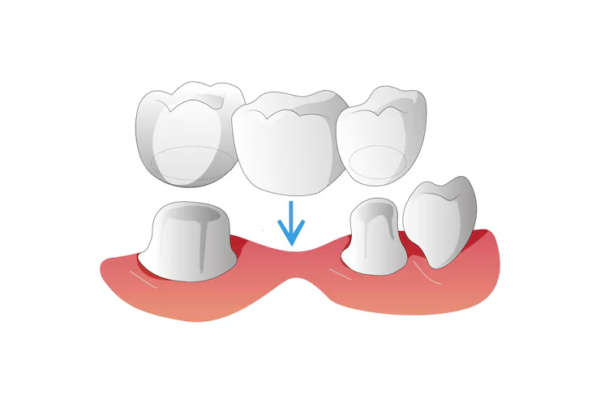
Dental bridges. A bridge replaces one or more missing teeth by anchoring an artificial tooth to crowns placed on neighboring teeth. It is a fixed restoration that can be completed more quickly than an implant and doesn’t require surgery. The adjacent teeth need to be prepared to hold the crowns, and cleaning beneath the bridge needs attention.
Dentures and partial dentures. Removable appliances can replace several teeth or a full arch. They may be a practical option when many teeth are missing, when bone or health limitations make other options difficult, or when budget is a factor. They need regular adjustment and care, and some patients find them less stable than fixed options.
How the options compare
| Factor | Implant | Bridge | Partial or full denture |
| Stability | Fixed, independent of other teeth | Fixed, supported by neighboring teeth | Removable; stability varies |
| Appearance and function | Can closely resemble a natural tooth | Can look natural; function is generally good | Varies; may take time to adjust |
| Maintenance | Brushing, flossing, regular visits | Special cleaning under the bridge | Daily removal and cleaning |
| Best suited to | Adequate bone and healthy gums | Healthy teeth on both sides of the gap | Multiple missing teeth or limited alternatives |
| Effect on neighboring teeth | None | Requires preparing adjacent teeth | Clasps may affect adjacent teeth |
Which one is right?
That depends on how many teeth are missing and where, your bone and gum health, the condition of neighboring teeth, your overall health, your goals, and practical considerations such as time and cost. Milcovich Dental Arts offers dental implants and restorative tooth replacement, and a consultation can include a discussion of which pathway may be appropriate for you.
What Are the Early Signs of Gum Disease?
Gum disease often develops gradually and painlessly, so noticing small changes is valuable. Early signs may include:
- Red or swollen gums
- Bleeding during brushing or flossing
- Tender gums
- Persistent bad breath or a bad taste that doesn’t go away
- Gum recession, where teeth look longer
- Changes in how your teeth fit together when you bite
- Loose teeth, which are generally a sign of more advanced disease
Gingivitis versus periodontitis
In simple terms, gingivitis is inflammation limited to the gums. The tissue is irritated by plaque but the bone and ligaments that hold the teeth in place are intact. With thorough cleaning and good home care, gingivitis can often be reversed.
Periodontitis is what can happen when inflammation continues. The gums begin to pull away from the teeth, forming pockets that trap bacteria, and the bone supporting the teeth can be gradually lost. That damage is not typically reversible, but periodontitis can usually be managed with professional treatment and consistent maintenance.
How Is Gum Disease Treated at Different Stages?
Treatment depends on how far the disease has progressed, and this overview is conceptual. The specific plan comes from your examination, which usually includes measuring pocket depths around each tooth and reviewing X-rays.
Early gum inflammation (gingivitis).
- Improved home care, including technique for brushing and cleaning between the teeth
- Professional cleaning to remove plaque and tartar
- Ongoing monitoring at regular visits
More advanced disease (periodontitis).
- Periodontal evaluation to measure pockets, assess bone levels and identify risk factors
- Deep cleaning, known as scaling and root planing, where appropriate. This removes plaque and tartar from below the gumline and smooths the root surfaces so the gums can reattach more healthily
- Ongoing periodontal maintenance, typically more frequent cleanings, to keep the condition stable
- Additional specialist treatment when necessary, which may include referral to a periodontist for surgical or other advanced care in complex cases
Milcovich Dental Arts provides deep cleaning and periodontal care as part of its services. If your situation needs care beyond what the practice provides, your dentist can talk with you about next steps.
Why Is Professional Dental Cleaning Important for Oral Health?
Brushing and flossing are essential, but they don’t remove everything.
Plaque is the soft, sticky film that forms constantly. Daily cleaning removes most of it. What is left can harden into tartar, or calculus, within a day or two in some areas. Once tartar has formed, it is bonded to the tooth and cannot be brushed off; it takes professional instruments to remove it.
A professional cleaning can help with:
- Removing tartar and plaque from places that are hard to reach at home, especially along and just below the gumline
- Supporting gum health by reducing the bacterial load that causes inflammation
- Polishing surfaces to reduce staining and make plaque less likely to cling
- Preventive monitoring, because the hygienist and dentist see changes over time
- Early detection of decay, gum changes, worn restorations and other concerns while they are still small
Milcovich Dental Arts provides routine dental cleaning and deep cleaning. A routine cleaning is intended for generally healthy gums, while a deep cleaning is considered when there is gum disease below the gumline. How often you should come in depends on your own risk factors, and your dentist can recommend an interval that suits you.
How Can Preventive Dentistry Help Avoid Bigger Dental Problems?
Preventive dentistry is more than getting your teeth cleaned. It is a set of habits and checkpoints designed to find problems early, or stop them from developing at all.
- Regular dental examinations. The dentist checks the teeth, gums, bite, jaw joints, soft tissues and existing restorations.
- Professional cleanings. These remove deposits you can’t remove yourself.
- Daily oral hygiene. The ADA recommends brushing twice a day for two minutes with fluoride toothpaste and cleaning between the teeth daily.
- Fluoride, where appropriate. Fluoride helps strengthen enamel and can reduce the risk of decay. Whether additional professional fluoride is useful depends on your individual risk.
- Digital X-rays when clinically indicated. Images can show decay between teeth, bone levels, and problems under the gums that can’t be seen directly. The frequency depends on your history and risk, not a fixed schedule.
- Oral cancer screening. A visual and tactile check of the mouth and throat can help find suspicious changes early.
- Monitoring existing dental work. Fillings, crowns and other restorations can wear over time, and checking them regularly allows small issues to be addressed before they become large ones.
- Patient education. Understanding your own risks, such as dry mouth, grinding or diet, is part of keeping your teeth healthy.
This philosophy fits with the way Milcovich Dental Arts describes its approach to long-term oral health: spotting concerns early, explaining findings clearly and helping patients keep their natural teeth comfortable and functional for as long as possible.
What Dental Treatments Can Improve the Appearance of Your Smile?
Cosmetic and restorative dentistry
Restorative dentistry focuses on repairing damaged or missing teeth to restore their function and health. Cosmetic dentistry focuses on improving the look of the smile. In practice the two overlap constantly. A crown placed to protect a cracked tooth can also improve its shape and color, and a cosmetic treatment such as veneers must be planned around the health of the teeth and gums beneath them.
Cosmetic dentistry in Walnut Creek, as offered at Milcovich Dental Arts, includes a range of options:
- Teeth whitening for stains on the natural tooth surface
- Dental bonding for small chips, shape irregularities and some discoloration
- Veneers for certain changes in shape, color or alignment
- Crowns, when a tooth needs both strengthening and a better appearance
- Invisalign, a clear aligner system for straightening teeth
- Gum contouring, or a gum lift, which reshapes the gumline
Gum contouring is a good example of a treatment where appearance and health meet. A gum lift in Walnut Creek may be considered when the gums cover a large amount of tooth, or when the gumline is uneven, but your dentist will first want to check that the gums and underlying structures are healthy and that the proposed change suits your teeth and your face.
Cosmetic treatment shouldn’t be only about looks. A good plan takes into account the health of your teeth and gums, how you bite and chew, and the long-term durability of what is placed.
When Should You Consider Teeth Whitening?
Whitening can be a straightforward option for the right kind of discoloration, but it doesn’t work the same way on every tooth.
Types of staining
- Extrinsic stains sit on the surface of the enamel and are caused by things such as coffee, tea, red wine and tobacco. These often respond well to whitening.
- Intrinsic stains originate inside the tooth. Causes include certain medications taken during tooth development, excess fluoride during childhood, trauma, aging, or a tooth whose nerve has died. These may respond less predictably to standard whitening.
Limitations to understand
- Whitening agents work on natural tooth structure. Existing fillings, crowns, veneers and bonding do not change color, so they may stand out after the natural teeth have lightened. Your dentist can help you plan around this.
- Results vary from person to person, and no responsible provider can promise a specific shade.
- Whitening can cause temporary sensitivity or gum irritation in some people.
- Whitening is not recommended for treating decay or gum problems; those need attention first.
Why an evaluation helps
A dental exam before whitening can identify cavities, worn areas, gum recession or old restorations that affect the plan, and can help you choose between professional options and over-the-counter products. The ADA Seal of Acceptance can help you identify consumer whitening products that have been evaluated for safety and effectiveness.
How Can Dental Bonding Repair Minor Tooth Imperfections?
Dental bonding uses a tooth-colored resin, which is shaped on the tooth and hardened with a special light, then polished to blend with the surrounding tooth.
Common uses
- Repairing small chips
- Smoothing minor shape irregularities
- Closing small gaps in selected cases
- Masking discoloration in selected situations
- Cosmetic reshaping, such as slightly lengthening a tooth
- Covering small areas of exposed root surface in some cases
Advantages
Bonding is often completed in a single visit, typically requires little or no removal of healthy tooth structure, and can often be done without anesthesia when the area is small. It is generally one of the more conservative cosmetic options.
Limitations
Bonding material is not as strong as natural enamel or porcelain, so it can chip or wear over time, especially if you bite hard objects or grind your teeth. It can also pick up stain more than some other materials, and it may need touch-ups or replacement. Larger repairs may be better served by a crown or veneer.
Milcovich Dental Arts offers dental bonding, and your dentist can tell you whether it is suitable for the tooth in question.
What Should You Know Before Choosing Veneers?
What veneers are
Veneers are thin shells that are attached to the front surface of teeth to change their color, shape, size or appearance.
Porcelain and composite at a high level
- Porcelain veneers are fabricated outside the mouth and are known for their resistance to staining and natural-looking translucency. They typically involve removing a thin layer of enamel, which is irreversible.
- Composite veneers are built directly onto the tooth from resin, as with bonding. They can often require less tooth removal and can be repaired more easily, but they may stain or wear sooner than porcelain.
What they can address
Veneers may be considered for stubborn discoloration, chips, worn edges, minor misalignment or uneven tooth shape.
What matters before starting
- Healthy teeth and gums. Veneers are bonded to teeth, so decay and gum disease need to be treated first.
- Treatment planning. The shape, color and bite should be planned carefully, because veneers change how your teeth look and meet.
- Longevity and maintenance. Veneers are not permanent. They can chip, loosen or need replacement over time, and they require good oral hygiene and sometimes a nightguard.
- Habits. Grinding, clenching and biting hard objects can damage them.
Not for everyone
Veneers may not be suitable if there is active decay or gum disease, if there is little enamel remaining, or if a patient has heavy grinding that has not been addressed. For some people, whitening, bonding, orthodontic treatment with Invisalign, or crowns are better answers. Veneers are one tool among several, not a superior option in all cases.
Which Dental Problems Require Urgent Treatment?
Contact a dentist promptly
These situations generally call for a call to a dentist right away, ideally the same day:
- Severe or persistent tooth pain
- A broken tooth, particularly with pain, a sharp edge or visible inner tooth
- Significant swelling in the gums or face
- Signs of a dental abscess, such as a swollen bump on the gum, a bad taste, throbbing pain or fever
- A knocked-out tooth
- Significant bleeding from the mouth
- Facial swelling
- Trauma to the mouth, teeth or jaw
If you’re looking for an emergency dentist in Walnut Creek, Milcovich Dental Arts provides emergency dental care for situations including tooth pain, broken teeth, swelling, knocked-out teeth and dental abscesses. Call the office to describe what is happening so the team can advise you on timing.
First-aid guidance for a knocked-out tooth
The ADA and the American Association of Endodontists advise the following for a knocked-out permanent tooth, and time matters:
- Pick the tooth up by the crown (the chewing surface), not the root.
- If it is dirty, rinse it briefly with milk or saline, or a short rinse with water. Do not scrub it or remove tissue fragments.
- If possible, gently place it back in its socket and hold it in place with clean gauze or by biting down gently.
- If you can’t reinsert it, keep it moist in milk, a tooth-preservation solution, or, if the person is old enough and alert, inside the cheek. Don’t store it dry or in plain water.
- Get to a dentist immediately. The sooner the tooth is reinserted, the better the chance it can be saved.
Baby teeth that are knocked out should generally not be put back, but the child should still be seen.
Seek emergency medical care
Some situations should not wait for a dental appointment. Go to an emergency department or call 911 if there is:
- Difficulty breathing
- Difficulty swallowing
- Severe swelling of the face, jaw or neck, particularly swelling that is spreading
- Uncontrolled bleeding
- Suspected serious facial or jaw injury, such as a possible fracture or head injury
- Other signs of a potentially serious systemic problem, such as high fever, confusion, or feeling very unwell along with a dental infection
Dental infections can spread to the face, neck and beyond, and these symptoms should be taken seriously. Don’t wait to see whether they settle.
How Can Your Dentist Help You Choose the Right Treatment Option?
This may be the most important idea in the guide: the goal is not simply to recommend a procedure. It is to understand the problem, explain the available options and help you make an informed decision.
Treatment selection typically depends on:
- Diagnosis, meaning what is actually causing the problem
- Severity, from early to advanced
- Amount of healthy tooth structure remaining
- Gum health
- Bone health
- Existing dental restorations and their condition
- Function and bite, including grinding or clenching habits
- Your goals, including how long you hope to keep the tooth and what you want it to look like
- Cosmetic concerns
- Overall health, including conditions such as diabetes, medications and smoking
- Long-term prognosis, meaning how likely the treatment is to last
- Budget and insurance considerations, where appropriate
Why similar symptoms can lead to different recommendations
Imagine two patients, each with pain when biting on a back tooth. One has a small crack in the enamel and a worn filling, and a replacement filling may resolve it. The other has a crack that extends toward the pulp and needs root canal treatment and a crown. Or consider two people with a chipped front tooth: one wants a quick cosmetic repair, and the other has a tooth with a deep fracture that needs more extensive restoration. Their symptoms look similar, but their needs differ.
A good conversation with your dentist should cover what is wrong, what the options are, what each involves, what happens if you wait, and what the likely costs and timelines are. You should feel able to ask questions and take time to decide when the situation allows.
Treatment comparison table
| Dental Problem | Possible Signs | Potential Treatment Options | How Urgent? |
| Cavity | Sensitivity to sweets or temperature, visible spot or hole, food trapping, sometimes no symptoms | Fluoride and monitoring (early), filling, crown for larger damage | Schedule soon; sooner if pain develops |
| Chipped tooth | Rough or sharp edge, sensitivity, change in tooth shape | Smoothing, bonding, filling, crown | Prompt if painful or sharp; otherwise soon |
| Cracked tooth | Pain on biting or releasing, temperature sensitivity, intermittent pain | Monitoring, bonding, crown, root canal treatment, extraction | Prompt attention; cracks can worsen |
| Severe toothache | Throbbing, lingering or spontaneous pain, pain that wakes you | Depends on cause: filling, root canal treatment, extraction, treatment of infection | Contact a dentist promptly, ideally same day |
| Bleeding gums | Bleeding when brushing or flossing, red or puffy gums | Improved home care, professional cleaning, periodontal evaluation | Schedule an appointment; sooner if persistent |
| Gum disease | Persistent bleeding, bad breath, recession, pockets, loose teeth | Cleaning, deep cleaning (scaling and root planing), periodontal maintenance, specialist care | Schedule soon; progression can be silent |
| Missing tooth | Gap, difficulty chewing, shifting neighboring teeth | Implant, bridge, partial or full denture | Not typically urgent, but earlier planning keeps more options open |
| Cosmetic imperfections | Stains, small chips, uneven shape, gaps, gum display | Whitening, bonding, veneers, crowns, Invisalign, gum contouring | Elective; plan around oral health |
| Dental infection | Swelling, bad taste, drainage, bump on the gum, fever, throbbing pain | Drainage, root canal treatment, extraction, antibiotics where indicated | Urgent; emergency care if swelling affects breathing or swallowing |
This table is for general education and is not a diagnostic tool. Only a dental examination can determine the appropriate diagnosis and treatment for your situation.
When to Call the Dentist: Quick Reference
Call a dentist if you experience:
- Persistent tooth pain
- A broken or chipped tooth
- Bleeding or swollen gums
- Pain while chewing
- Significant or lingering sensitivity
- A loose permanent tooth
- Facial swelling
- Signs of infection, such as a bad taste, drainage or a bump on the gum
- A knocked-out tooth
Seek emergency medical care (emergency department or 911) if you have:
- Difficulty breathing or swallowing
- Severe or rapidly spreading swelling of the face or neck
- Bleeding that will not stop
- A suspected broken jaw or serious head or facial injury
- A dental infection with high fever, confusion or feeling severely unwell
If you’re unsure, call. Describing your symptoms to a dental office is a reasonable first step, and the team can help you work out how quickly you should be seen.
Frequently Asked Questions
- What is the most common dental problem?
Tooth decay is one of the most common chronic conditions worldwide, according to the CDC and NIDCR, and gum disease is also widespread among adults. Both are largely preventable with regular home care, professional cleanings and checkups.
- How do I know if a broken tooth is an emergency?
A broken tooth deserves prompt attention if there is significant pain, bleeding, a sharp edge cutting your mouth, a visible inner portion of the tooth, a loose or shifted tooth, or swelling. A small chip with no symptoms may be less urgent, but should still be examined. If a facial or head injury accompanies the break, or you have trouble breathing or swallowing, seek emergency medical care.
- Can a chipped tooth repair itself?
No. Enamel cannot regenerate once a piece has broken off. A tiny chip may not need treatment beyond smoothing, but a dentist should look at it to make sure the tooth isn’t cracked or exposed. Leaving a chip alone can allow the remaining tooth to weaken, collect decay or break further.
- When does a toothache require urgent dental care?
Pain that is severe, persistent, or worsening, or that comes with swelling, fever, a bad taste, or a bump on the gum, should be seen promptly. So should pain that wakes you at night or follows an injury. Mild, brief sensitivity can usually wait for a routine appointment, but should still be checked.
- Can gum disease be reversed?
Gingivitis, the early stage, can often be reversed with thorough cleaning, good home care and professional treatment. Periodontitis, which involves loss of supporting bone, generally can’t be fully reversed, but it can usually be controlled with professional treatment and regular maintenance. Early attention gives the best outcomes.
- Is a filling or crown better for a damaged tooth?
Neither is better in every case. A filling may be suitable when enough healthy tooth remains to support it. A crown may be considered when a large part of the tooth is damaged or weakened, or when the tooth has had root canal treatment. Your dentist can explain which fits your tooth and why.
- What are the options for replacing a missing tooth?
The main options are dental implants, bridges, and partial or full dentures. The right choice depends on how many teeth are missing, your bone and gum health, neighboring teeth, your goals and your overall health. A consultation can help you compare the benefits and trade-offs.
- How do I know which cosmetic dental treatment is right for me?
Start with what bothers you about your smile and what you hope to change. A dentist can then check the health of your teeth and gums and discuss options such as whitening, bonding, veneers, crowns, Invisalign or gum contouring. Often a combination or a more conservative step is a better fit than a single dramatic one.
Take the Next Step
If you are experiencing pain, tooth damage, gum concerns or simply aren’t sure which treatment you need, an evaluation can help clarify what’s happening and what your options are.
At Milcovich Dental Arts, Dr. Milcovich and the team take the time to explain what they find, talk through the choices that may be appropriate for you, and support you in making a decision that feels right. If you’re looking for a dentist in Walnut Creek, CA, you can contact the practice to schedule an appointment or to ask whether your symptoms need to be seen sooner.